Why Heavy Industrial Work Demands a Different Kind of Robot | Gary Chen & Conley Oster of Raise Robotics
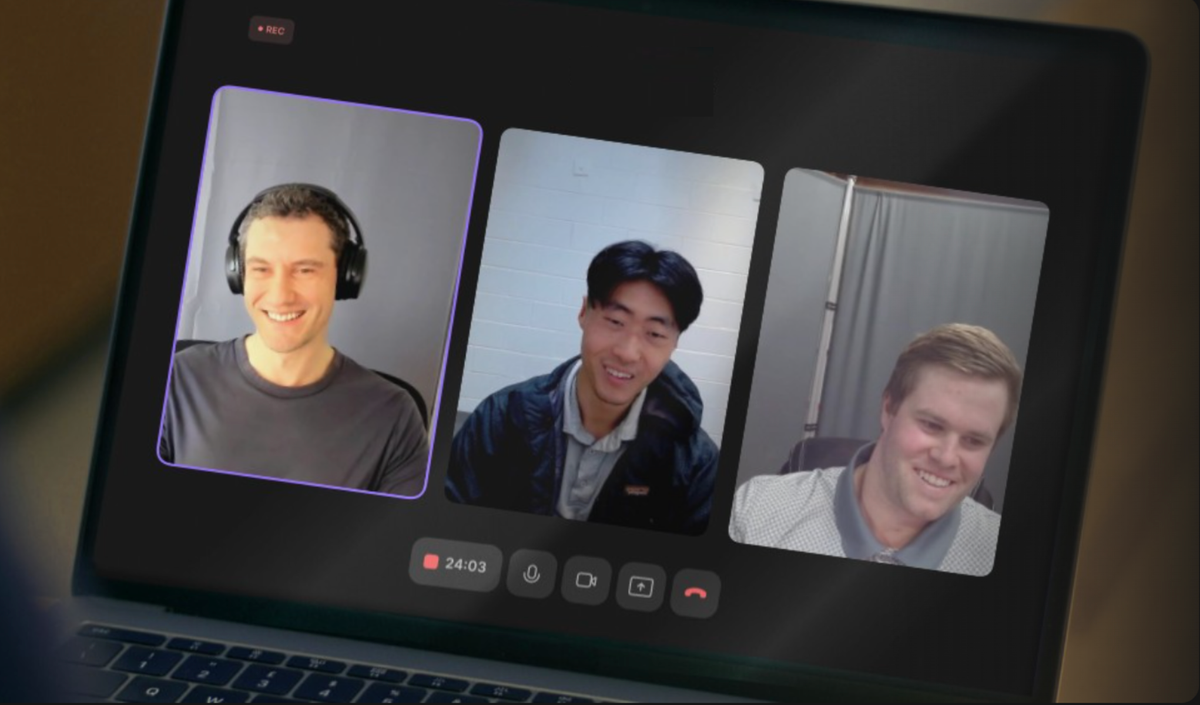
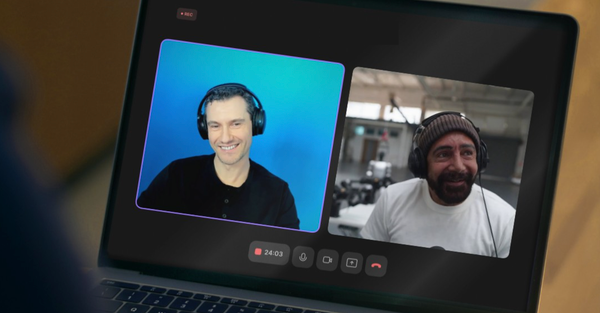
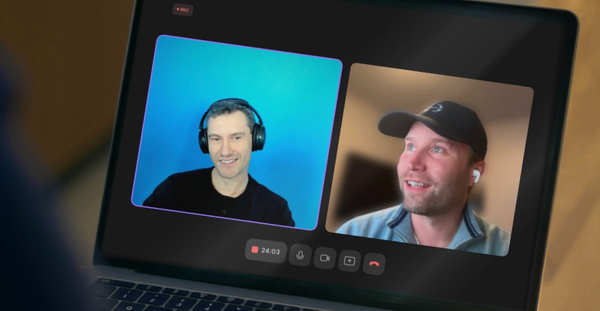
Gary Chen and Conley Oster of Raise Robotics have deployed robots on construction sites, in steel fabrication facilities, and in shipyards. Their view on humanoids is more nuanced - and more grounded - than the narrative driving most of the capital right now.
Listen to the episode here:
Summary:
There is a lot of capital flowing into humanoid robots right now, and construction and heavy industry are two of the most frequently cited target markets. The pitch is intuitive: these industries are built for humans, so robots that look like humans should be the natural fit.
Gary Chen and Conley Oster don't buy it. They're co-founders of Raise Robotics, and they've spent the last several years building and deploying mobile manipulators on actual job sites - commercial construction, steel fabrication, shipyards. Not in demos. In the field. Their take on the humanoid framing is worth understanding if you're investing or building in this space.
What the work actually looks like
Before getting into the technology debate, it's worth understanding what heavy industrial work actually feels like from the inside.
Conley described walking onto a construction site for the first time: immediate sensory overload, big equipment moving in every direction, loud noises, bright lights. "Everyone is super focused and super fixated on getting their work done. It's kind of just your job to stay out of the way. Don't get run over by a backhoe."
Gary, whose background is in robotics and previously Waymo, described his own adjustment to field work differently: the weather. Working on robots at 100°F in Dallas in the summer, walking 12 flights of stairs multiple times a day on sites where the hoist was broken. "The environment is challenging. It takes a toll on your body."
The labor shortage in these industries is real, but it's more nuanced than it sounds. It's not that no one will show up. It's that skilled labor - the people who've spent 20 or 30 years mastering a specific trade - are retiring, and the next generation isn't coming up fast enough. Every customer they've visited across construction, shipbuilding, and manufacturing tells the same story: their best person is 60 years old and once they're gone, there's a gap nobody knows how to fill.
The physical toll compounds this. Falls from height, crushed-by incidents, repetitive overhead work. Conley described it simply: "If there was a better way to do it, people would prefer not to do it."
Why humanoid isn't the answer
The dominant narrative assumes you solve automation in heavy industry by replacing the human with a human-shaped machine. Gary and Conley's argument is that this misunderstands what the limiting factor actually is.
As Conley put it: "We're looking at applications where human physiology is the limiting factor. Adopting a human form factor does not enable anything else. We're dealing with the exact same constraints. If we're doing long reach or high overhead work, putting a humanoid in a man basket is just replacing the human with a human-looking machine. It's not solved."
Gary framed it through the self-driving car parallel. We didn't solve autonomous driving by building a robot that could sit in the driver's seat of a taxi. We built the car itself into the robot - the hardware was already there, and the challenge was primarily software. But in heavy industrial environments, there is no existing physical form factor that can be a drop-in. The robot has to be built. And when you actually look at these environments, it's often human physiology - limited reach, limited payload, susceptibility to fatigue - that creates the problems in the first place. Replicating that in metal doesn't fix it.
Gary also noted something practical: "The human form factor just wasn't big enough, surprisingly." Many of their applications require lifting hundreds or thousands of pounds, reaching around columns, working in configurations that people can't physically achieve without compromising safety. Cranes exist because humans cannot lift steel beams. A humanoid doesn't change that.
The "simple task" problem
Raise Robotics' robots do tasks that sound almost trivially simple: drawing lines, drilling holes, painting surfaces. So why do they charge a lot for it, and why is this hard?
Conley pushed back on the framing directly: "It's a disservice to oversimplify it. People make a living doing each of these discrete items - an entire career of drawing a line." Getting an entire building facade laid out to one-sixteenth of an inch requires understanding geometry, processing CAD inputs, knowing how to interface with a project manager. The soft skills and judgment accumulated around "just" drawing a line are enormous. "Something so simple as drawing a line ends up messing up everything."
Gary added the technology angle: what a robot is actually doing when it performs these tasks is bridging the design world and the physical world. "That's what tradespeople have been doing for hundreds, thousands of years. They take the design that this team has worked on and they're trying to figure out intellectually, how do I move my body to get that design to become real in the world. That's actually a very, very complex process."
This is also where the labor shortage creates a second-order problem. As skilled workers retire, you don't just lose labor capacity - you lose the accumulated intelligence embedded in how they do their work. The tribal knowledge of how to paint a surface, which tool path actually works, how to handle a situation the CAD file didn't anticipate. Conley described it as "losing the human LLM that's been created to deliver these projects." Raise Robotics has partnered with America's largest labor union in part to capture and digitize that knowledge before it walks out the door.
What investors get wrong
Gary drew the comparison to self-driving circa 2015: enormous capital, unrealistic timelines, a reckoning around COVID. "It's really easy to make demos. But it does take time to truly get all the kinks worked out." His point wasn't pessimism - Waymo works, and he's still a fan. It's that patience matters and demo quality is not deployment quality.
Conley's version: investors over-indexing on specialization. The conventional wisdom has been that robots doing one thing well beat robots trying to do multiple things. His argument is that this is becoming less true. New training methods let you deploy new applications on top of existing platforms faster than ever. And from a customer's perspective, a general-purpose platform is far easier to sell and justify than a specialized tool with narrow utilization. "If I can get a Bobcat instead of a wheelbarrow, I'm going to get the Bobcat."
What 2030 looks like
Conley sees two major themes: better process data (inspection tools, IoT, real visibility into how work is actually being delivered), and robots having substantially offset humans from hazardous work. People on lift platforms, spraying caustic aerosols, doing precision overhead work - in his view, those scopes should be predominantly robotic by 2030.
Gary sees the industrial sector finally developing structured technology adoption processes - the equivalent of how software companies run pilots, A/B tests, and phased rollouts. Right now, industrial technology adoption is largely informal. That changes.
The most striking data point they shared: a major shipbuilder posted for a welder and received two applicants over two weeks. They repackaged the role as "robot welding technician" - same outcome, managing automation instead of doing the welding directly. Thousands of applications. The labor market is already signaling what it wants.
Conley's five-year goal: be the first company in the space where customers get an insurance benefit from deploying their systems. No one has done it yet. He thinks they're close.
Full episode available on:
YouTube
Spotify
Apple Podcasts
Learn more about Raise Robotics: www.raiserobotics.ai
Watch the recording:
See the robot in action - fully autonomous!!
The OPTIM Update is a podcast and newsletter about real-world AI - robotics, automation, and AI Infrastructure. Past the headlines, into how these technologies are really built, deployed, and scaled.