Useful Now: The Case for Application-Specific Robots | Arjun Subramaniam, Factory Intelligence
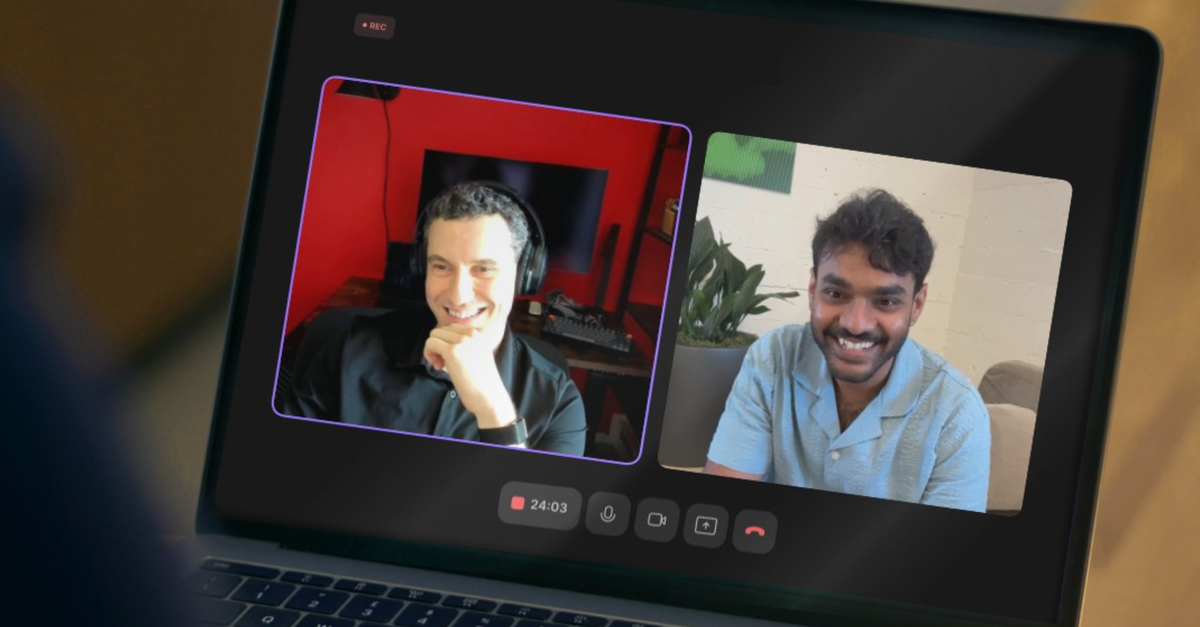
Arjun Subramaniam is the Founder and CEO of Factory Intelligence, a physical AI company training tactile foundation models for the real world. He's personally toured more than 70 factories deploying robots, and his co-founder Mike Strope spent 15 years in packaging, including a president seat at a global packaging machinery manufacturer. Their first workcell has eight robots building electrical outlets at $3 per hour.
We walk through his "Useful Now" thesis - the contrarian bet against humanoids and general-purpose foundation models. We cover what it actually looks like inside an electrical prefab shop, why vision alone fails for industrial manipulation, and what happened when his wire-bending model started generalizing to colors it had never been trained on - with less than five hours of data. We also sit in the integration trap question that every robotics-as-a-service company eventually has to answer.
Learn more about Factory Intelligence: https://factoryintelligence.com
See the episode here:
Summary
Arjun's background is unusually wide for a robotics founder. Industry 4.0 research at Purdue, swarm robotics, reinforcement learning, digital twins, then years as Director of Robotics and AI at a packaging solutions provider, then partner at a robotics integrator, then touring 70+ factories deploying robots across the Midwest. His co-founder Mike comes from the other side - 15 years building packaging machinery that had to work across 60 countries through 175 distributors, often without the manufacturer ever touching the end customer. This isn't a research lab spinning out. These are two operators who saw the gap from inside the industry.
We spent about 45 minutes going deep on what Factory Intelligence is building, why, and what it actually looks like on a shop floor. Here are the parts that stuck with me.
The gap between a lab demo and a factory deployment
Arjun was direct about this: doing robotics in a lab is hard, but it's way easier than you'd think. The complexity grows exponentially the further your robot gets from where you are. In a lab, there's no SLA. There are no customers. Nobody gets mad when it doesn't work reliably. You just need to reproduce it enough to publish a paper.
In a factory, you need to reproduce it every single second. Some production lines cost $20,000 an hour. On dairy lines, ice cream lines, a minute of delay cascades down the line until you have milk expiring because your robot screwed up. And you're far away. You can't babysit it. You can't cherry-pick the times it works. It needs to work when you're not watching.
This is the kind of thing that sounds obvious but isn't. A lot of well-funded robotics companies are still operating at the "works in the lab" stage and calling it progress. Arjun has years of scar tissue from what happens next.
Why you can't buy your way to a dataset
This was the most interesting strategic claim in the conversation. Arjun argues that there's not enough money you can raise to bootstrap a large enough dataset of real manipulation for real-world industrial tasks. You have to start with the long tail first - build specialist systems doing actual paid work - and then generalize toward a foundation model.
He drew the Tesla vs. Waymo parallel: Waymo had billions in Google money to burn. Tesla sent actual cars doing real, useful work into the world. People said self-driving was solved for 10 years. It wasn't. And with manipulation, the long tail is even longer, because you're constantly touching, pushing, exerting forces on things, and things are exerting forces back on you. The dimensionality is enormous.
His positioning is that as foundation models and backbones get better, Factory Intelligence's business only gets bigger. They sit at the applications layer. They don't get disrupted by better models - they benefit from them. It's the same logic you hear from the best agentic AI companies right now: build where the value grows as the base models improve, not where it shrinks.
Vision alone is not enough
Arjun pushed hard on this. Vision has been easy to scale because you can pull data from the internet - YouTube, images, VLMs. That gets you to the middle of the bell curve. Lab tasks, clean environments, objects that deform visually when you interact with them. But in industrial manipulation, a lot of what the robot is doing doesn't change visually. Picking up a block of metal. Inserting a part. Bending a wire. There's no visual differentiator between states.
Current VLA models are mostly stateless and vision-based. The environment has to change visually for the model to understand that the subtask is done. For a lot of industrial work, it doesn't.
His example was simple and stuck with me: grabbing a pen from a bin of pens. You don't look at each pen. You reach in and feel for one. A vision-only model has to process enormous features at every timestep just to figure out if the pen is in the grasp yet. At five boxes per minute on a production line, that's not fast enough. You need force feedback, torque, tactile sensing - modalities where the data is lower-dimensional but higher-signal, and the robot can move at real speed.
Inside an electrical prefab shop
This was the segment that grounded the whole conversation. Most people have never set foot in a prefab shop, and Arjun walked through it in detail.
The old way: union electricians with 20-30 years of experience bring raw materials on site, bend wires by hand, hook them onto outlets, screw them in, tape them. One at a time. A hundred for a house. Ten thousand for a building. Prefabrication changed the game - move as much work as possible offsite into a centralized facility, build components there, then ship kits to the site and assemble like Legos. That's how skyscrapers go up in a year now.
Factory Intelligence's first workcell - Prefab-Cell-E1 - has eight robots building outlets for their first customer, Houston Electric in Indiana. Three dollars per hour, 10x cheaper than equivalent labor, 3x the throughput. The cell pulls work orders straight from the customer's ERP system, knows which outlets to build, which wire spec to use, and produces the exact quantity on schedule. From order to truck.
Every building in America needs an outlet roughly every eight feet. Every data center, every house, every high-rise. The bottleneck isn't materials. It's labor. Electricians are booked out years in advance. People are flying tradespeople in from other countries.
The integration trap - and why they think they avoid it
I asked the hard version of this question: every robotics-as-a-service company eventually hits the wall where each customer needs custom fixtures, custom workholding, custom safety setups. The fully-loaded deployment cost wrecks the margin.
Arjun reframed the whole thing. Factory Intelligence isn't automating manufacturing processes - they're building skilled labor. The robot is the electrician, the machine tender, the maintenance technician. It understands the job, not the specific factory. What changes between customers is the environment. What stays the same is the task. It's the reason you can hire someone who worked at a different factory and they can still do the job - what they're working on is different, but what they're doing is the same.
Their software platform is modular - it plugs into common ERP systems (Oracle NetSuite, SAP), interfaces with factory data historians, and doesn't treat every deployment like a one-off science project. That combination of very specialized tasks and a modular platform is how they keep the deployment economics from breaking.
Less than five hours of data
A month after kicking off their first pilot, their wire-bending model was generalizing to wire colors it had never been trained on. The reason: adding tactile modalities means the robot has a grounding between what it sees and what it feels. There are fewer possible states when you have touch data, so the model needs dramatically less training data to get going.
Less than five hours of on-site data across all tasks was enough.
Arjun's bet is that each new task gets faster and easier as the robot learns more materials and more force profiles. And they get paid to collect all this data, because the robots are deployed doing real work. That's the data flywheel - it doesn't require millions in venture money to spin up, because it's funded by operations.
Neuro-classical controls
Most teams pick a lane: end-to-end neural networks or classical control. Factory Intelligence combines both. Neural networks handle the middle of the bell curve - normal variability within the training distribution. Classical controls handle the long tail - edge cases, failure recovery, safety.
They use neural network trajectories but edit and verify them with classical motion planning. They simulate forces. They enforce no-go zones and collision checks. And they run a dual-layer planner: a high-level position planner on top, and a low-level compliance planner underneath that executes with the right amount of force until it hits a desired state.
This is closed-loop compliant control, and it's what lets their robots work at real-time speed around humans. Most VLA demos you see online are running at 6-8x slower than real time, with people holding hockey sticks near the robot because it's not safe. That's not deployment. This is.
Data centers on the moon
When I asked Arjun what the world looks like in five years if Factory Intelligence works, his answer was: data centers on the moon. Mining asteroids. True abundance.
His argument is that we're limited to 24 hours per day per human. Once robots can do skilled manipulation reliably at scale, production capacity is uncapped. The comparisons to China that people like to make are a low bar. We can do much more once we solve the base problem.
This was a conversation I'd been looking forward to for a while. Arjun is building in a space where the consensus bet is on humanoids and general-purpose models, and he's making the opposite play - application-specific, full-stack, deployed, generating revenue and proprietary data from day one. Whether or not you agree with the thesis, the specificity of his answers is worth paying attention to.
Give it a listen!
Full episode available on:
Learn more about Factory Intelligence: https://factoryintelligence.com