The State of Silicon Photonics: Who's Building, Who's Buying, and Where the Industry Is Heading
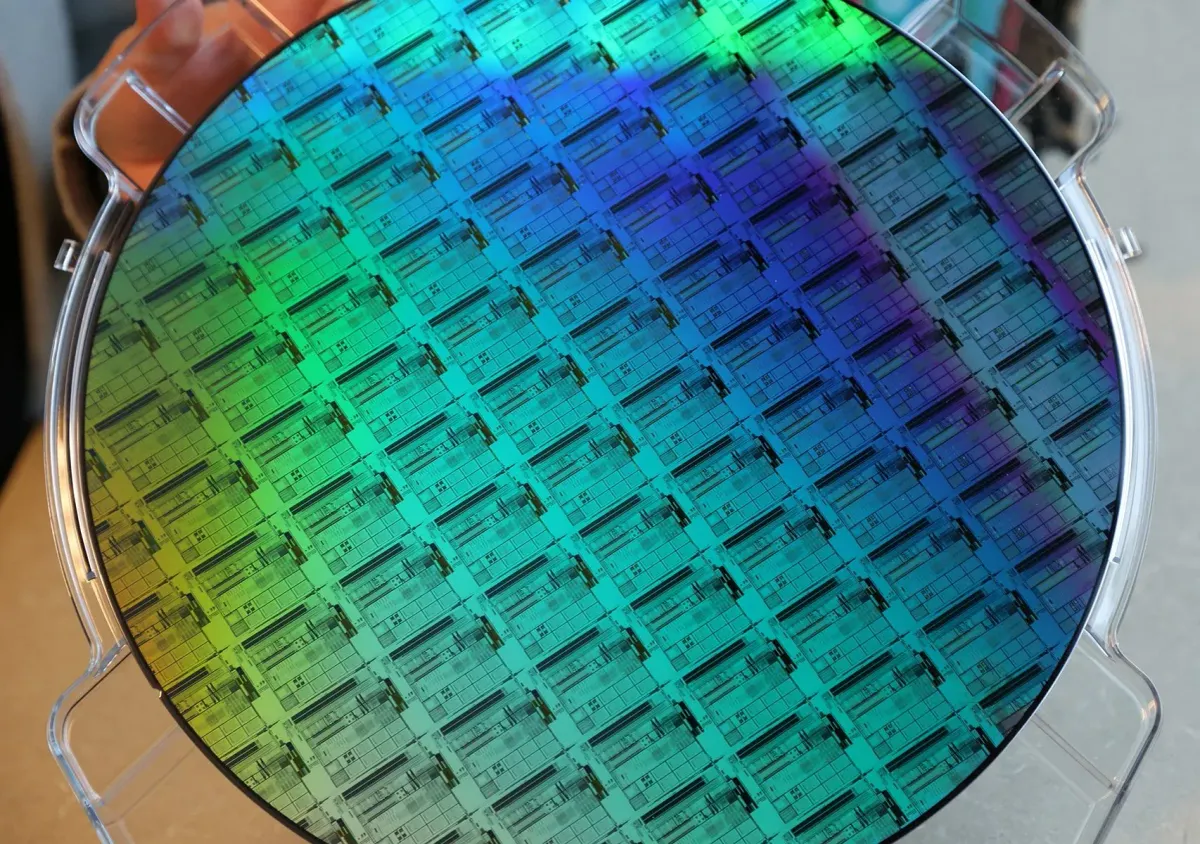
More than $15 billion changed hands in the silicon photonics sector between late 2025 and mid-2026. That figure includes NVIDIA's $4 billion split between Coherent and Lumentum, Marvell's $3.25 billion acquisition of Celestial AI, Ayar Labs pulling in $500 million in a Series E, and a string of smaller but telling deals from AMD, Ciena, GlobalFoundries, and Credo. The optical interconnect space has gone from a niche corner of semiconductor R&D to one of the most active investment categories in tech.
This article maps what's happening, who the key players are, and where the technology is going. It covers the incumbents making acquisitions, the startups raising capital, the foundries scaling production, and the technical problems that still need to be solved before silicon photonics can deliver on its promise of replacing copper at the heart of AI infrastructure.
Why Copper Is Running Out of Road
The shift to silicon photonics is driven by a physical constraint, not a market trend. As AI clusters grow larger, the copper interconnects that link GPUs, switches, and memory are hitting hard limits on bandwidth, power, and reach.
NVIDIA's Blackwell architecture connects 72 GPUs within a single rack using more than 5,000 copper cables. That works for current-generation systems, but the next generation needs to scale to over 1,000 XPUs per cluster, and copper can't physically sustain those speeds over the required distances. Jensen Huang has been direct about this: copper works for a meter or two, but AI data centers are measured in football fields.
The numbers behind the transition are significant. According to Precedence Research, the global silicon photonics market was valued at $2.86 billion in 2025 and is projected to reach $28.75 billion by 2034, growing at a 29.25% CAGR. Yole Group estimates the silicon photonics module market specifically will grow from $4.2 billion in 2024 to $24.8 billion by 2030, a 35% CAGR. And TrendForce projects that global shipments of 800G-and-above transceivers will jump from 24 million units in 2025 to nearly 63 million in 2026, a 2.6x increase in a single year.
These are not speculative forecasts built on distant timelines. The upgrade from 800G to 1.6 terabit transceivers is happening now, driven by hyperscalers like AWS, Microsoft, Google, and Meta who are spending tens of billions annually on AI data center infrastructure. The question for the industry isn't whether copper-to-optical happens. It's how fast, through what architectures, and who captures the value.
The Acquisition Wave
The clearest signal that silicon photonics has crossed from research into strategic necessity is the M&A activity. Every major semiconductor and networking company has made at least one move to bring optical capabilities in-house.
Marvell and Celestial AI is the largest deal in the space. In December 2025, Marvell announced a definitive agreement to acquire Celestial AI for $3.25 billion, composed of $1 billion in cash and 27.2 million shares. Celestial AI had been valued at $2.5 billion in a March 2025 funding round and had Intel CEO Lip-Bu Tan on its board. The acquisition closed in February 2026. Celestial's Photonic Fabric technology is designed to decouple memory from compute using light rather than copper, letting processors access remote memory pools at speeds and latencies that approximate on-chip performance. Marvell expects the acquisition to reach a $500 million annualized revenue run rate by Q4 fiscal 2028, doubling to $1 billion by Q4 fiscal 2029.
Ciena and Nubis Communications was the deal that the ecosystem treated as the first real silicon photonics exit of the generative AI era. Ciena paid $270 million in cash for Nubis in September 2025, acquiring co-packaged and near-packaged optical engines that advertise up to 6.4 Tb/s full-duplex per module along with analog active copper links at 200 Gb/s per lane over four meters. The deal added 50+ engineers and folded Nubis into Ciena's high-speed SerDes roadmap. For a company historically positioned in long-haul and metro telecom, this was a clear move into the AI data center interior.
AMD acquired Enosemi, a Silicon Valley startup developing custom materials for silicon photonics product development, focused on co-packaged optics. The deal signals AMD's intent to control optical I/O around its compute dies rather than relying on third-party solutions.
GlobalFoundries made two acquisitions: Advanced Micro Foundry (AMF), described as arguably the most important pure-play silicon photonics fab outside the U.S., and InfiniLink, an optical chipmaker developing SerDes and optical solutions for AI data centers. Together, these deals give GlobalFoundries a claim to being the largest dedicated silicon photonics foundry globally, with an end-to-end photonics offering.
Credo Technology agreed to acquire DustPhotonics in April 2026, picking up silicon photonics PIC technology spanning 400G, 800G, and 1.6T with a roadmap to 3.2T. The deal positions Credo with a vertically integrated connectivity stack covering SerDes, DSP, silicon photonics, and system integration.
As one analysis of the M&A landscape put it, the industry is renegotiating where copper ends and optical begins, and the optical share of that boundary is expanding. Since late 2025, the deal flow has included Marvell/Celestial AI, GlobalFoundries/AMF, GlobalFoundries/InfiniLink, AMD/Enosemi, Ciena/Nubis, and Credo/DustPhotonics. The entire industry is moving to stake out different pieces of the optical value chain.
NVIDIA's $4 Billion Bet
NVIDIA's investment deserves its own section because the scale and structure are different from anything else in the space. In March 2026, NVIDIA announced two separate $2 billion strategic partnerships with Coherent and Lumentum. Each deal includes growth equity, multibillion-dollar purchase commitments, and future capacity access rights for advanced lasers and optical networking products.
This isn't venture investing. It's supply chain control. Both Coherent and Lumentum are already partners on NVIDIA's Spectrum-X switches, which use Lumentum lasers and Coherent's silicon photonics. Lumentum plans to build a new fabrication facility to meet anticipated laser demand, and Coherent is adding to its existing U.S. manufacturing footprint.
The playbook is familiar. NVIDIA did the same thing with HBM memory suppliers, securing allocations years in advance while competitors scrambled. It did the same with CoreWeave, investing $2 billion and creating a dependent customer. Now it's doing it with photonics: invest early, lock up supply, and make the ecosystem dependent on suppliers that are aligned with NVIDIA's roadmap.
As Futurum Group noted, indium phosphide and laser fabrication have become the emerging constraint on AI infrastructure scaling. NVIDIA's investments signal that the company sees optical components as strategically equivalent to GPUs and advanced packaging in the AI supply chain.
The Startup Landscape
Behind the incumbents is a deep field of venture-backed startups, several of which have reached billion-dollar-plus valuations.
Lightmatter is the most highly valued private company in the space at $4.4 billion following a $400 million Series Dled by T. Rowe Price. The company has raised over $821 million. Founded in 2017 as a spin-out from MIT, Lightmatter offers two product lines: Envise, a photonic processor for AI computation, and Passage, a 3D photonic interconnect system that uses an optical interposer to enable edgeless I/O across the entire surface of a chip. The company recently demonstrated a 16-wavelength bidirectional optical DWDM link on a single strand of standard single-mode fiber, claiming an 8x leap in bidirectional fiber bandwidth density. Lightmatter's investor base includes Sequoia Capital, GV, Fidelity, Viking Global, and T. Rowe Price.
Ayar Labs has raised approximately $874 million in total funding, including a $500 million Series E in March 2026 that values the company at $3.8 billion. Ayar's approach centers on TeraPHY, a silicon photonics optical engine that provides 2 Tb/s of bandwidth via eight optical engines, designed to sit directly on the processor substrate. To power TeraPHY, Ayar developed SuperNova, a multi-wavelength external light source supplying 16 wavelengths. The company's investor roster is one of the densest in the sector, featuring Nvidia, Intel Capital, Sequoia Capital, Founders Fund, In-Q-Tel, and dozens of others.
Xscape Photonics raised a $44 million Series A with investment from Cisco and NVIDIA. Founded by researchers from Columbia University, Xscape is building programmable comb lasers that generate 4-16 wavelengths (eventually scaling to 128), arguing that DWDM will be necessary inside AI nodes because physical space for optical connectors will run out. The company validated its on-chip laser technology with Tower Semiconductor in September 2025.
OpenLight raised $50 million in a Series A-1 in April 2026, bringing total funding to $84 million. The company operates an open foundry model for Photonic Application-Specific Integrated Circuits (PASICs), licensing its PDK and manufacturing technology to customers. OpenLight's roots go back to Aurrion, a UC Santa Barbara spin-out acquired by Juniper Networks in 2016. More than 25 companies currently use OpenLight's PDK to design and fabricate custom photonic chips. The round was led by Matter Venture Partners with participation from Catapult Ventures, Acclimate Ventures, and existing investors Xora Innovation, Capricorn Investment Group, Mayfield, and New Legacy.
Scintil Photonics raised $58 million in a Series B that included investment from NVIDIA. Based in Grenoble, France, Scintil has developed a multi-stage process to integrate III-V devices with silicon photonics, focusing on multi-wavelength laser sources for co-packaged optics deployment. The company has partnered with Tower Semiconductor for manufacturing.
Quintessent raised $11.5 million in a seed round backed by Tower Semiconductor. The company is working on quantum dot lasers for heterogeneous integration on silicon, targeting thermal stability as its key differentiator.
Beyond these, the landscape includes companies like Avicena ($335 million valuation, microLED-based optical interconnects), Lucidean (mixed-domain coherent technology), Anello Photonics ($117.9 million valuation, photonic gyroscopes), and dozens of earlier-stage startups spread across the value chain from materials to packaging to test equipment. A PitchBook search on "silicon photonics" as an emerging space returns over 110 U.S.-based companies, 59 of which are privately held with venture backing.
The Foundry Race
Silicon photonics chips need to be manufactured somewhere, and foundry capacity is its own bottleneck. The major players are scaling aggressively.
Tower Semiconductor is investing $300 million to triple its silicon photonics capacity by mid-2026. Tower operates 200mm SiPh fabs in California, Texas, and Israel, plus a 300mm fab in Japan. The company plans to double its silicon photonics revenue in 2026, challenging GlobalFoundries for the top position. Tower is also the manufacturing partner for both Scintil and Xscape Photonics.
GlobalFoundries has positioned itself as the go-to foundry for fabless photonics companies through its GF Fotonix platform. The acquisition of AMF gives GlobalFoundries a "China-free" supply chain for optical chips, a selling point that may become mandatory for U.S. hyperscalers. The acquisition of InfiniLink adds SerDes capability and a multi-year pluggable and CPO roadmap. GlobalFoundries is now pursuing an end-to-end photonics solution strategy.
TSMC is playing a different game, focused on advanced packaging rather than photonic chip fabrication. Its COUPE (Compact Universal Photonics Engines) platform enables co-packaged optics by integrating photonic engines directly with processor packages. Ayar Labs and its partner Alchip demonstrated a working prototype at TSMC's OIP 2025 event, featuring eight optical engines on a single substrate with over 100 Tb/s of scale-up bandwidth per accelerator.
UMC is the newest entrant, having licensed imec's iSiPP300 silicon photonics process with plans to begin risk production in 2026-2027. This adds another option for fabless photonics companies and introduces competitive pressure into the foundry market.
LightCounting, the optical industry research firm, titled its November 2025 newsletter "The Year of Silicon Photonics: 2026", noting that the foundry capacity race is now as strategically important as the chip design race.
The Laser Problem
Silicon can route light. It can modulate light. It can detect light. What it cannot do efficiently is generate light. Silicon has an indirect bandgap, which means it is intrinsically incapable of making an efficient interband light source. This is not a new problem. Academic literature has called it a bottleneck for over a decade, and the characterization hasn't softened over time. A 2023 paper in eLight described how on-chip light sources lagged far behind other silicon-based photonic devices and became a bottleneck for mass production. A December 2025 paper in the Japanese Journal of Applied Physics stated that the realization of efficient on-chip light sources remains a major bottleneck for CPO.
The practical consequences are measurable. According to data presented by Meta at the Optical Fiber Communication Conference (OFC), 90% of optical link failures can be traced back to the laser, and the laser consumes approximately 60% of the power in next-generation optical links. These numbers come from one of the world's largest buyers of optical interconnects, not from a startup pitch deck.
The industry is pursuing multiple approaches to solve this problem, and they disagree on the right path:
External laser sources keep the laser physically separate from the silicon photonics chip, typically in a module or appliance that feeds light through fiber to the photonic engine. Ayar Labs takes this approach with its SuperNova light source. The advantage is thermal isolation: lasers generate significant heat, and keeping them away from the processor reduces thermal interference. The tradeoff is added complexity in packaging and fiber attachment.
Heterogeneous integration bonds III-V semiconductor materials (like indium phosphide) directly onto the silicon photonics wafer. OpenLight's PDK is built on this approach, integrating lasers, modulators, amplifiers, and detectors on a single chip. Scintil has developed a multi-stage process for the same goal. The advantage is integration density. The challenge is manufacturing complexity and yield.
Quantum dot lasers grow III-V quantum dot structures directly on silicon substrates. Quintessent is the primary startup pursuing this approach. The theoretical advantage is compatibility with standard CMOS processes and better thermal stability than traditional III-V lasers.
Comb lasers use a single laser to generate multiple wavelengths simultaneously, enabling DWDM transmission from a compact source. Xscape Photonics is building programmable comb lasers that support CWDM and DWDM wavelength grids. The advantage is bandwidth density from fewer components. The challenge is controlling output power uniformly across wavelengths.
Each of these approaches has backers, funding, and technical merit. The market hasn't converged on a winner, and it's possible that different architectures will serve different use cases. What's clear is that whoever delivers reliable, scalable, cost-effective laser solutions at volume will capture an outsized share of value. As one industry report put it, solving the laser integration bottleneck is the primary focus of the industry and the holy grail that will unlock the full potential of silicon photonics.
The Road to Co-Packaged Optics
The current silicon photonics market is dominated by pluggable transceivers: self-contained optical modules that plug into the front panel of a switch or server. These are a proven, high-volume product category. But the industry knows they are a transitional technology. The endgame is co-packaged optics (CPO), where photonic engines are integrated directly onto the switch or accelerator package, millimeters from the processor rather than inches away at the faceplate.
CPO reduces power consumption significantly. Pluggable modules consume 16-18W for 800G applications, while CPO achieves approximately 5.5W. At 1.6T, the gap widens further: CPO requires around 11W versus 20-30W+ for pluggables.
The deployment timeline is becoming concrete. Broadcom shipped tens of thousands of Tomahawk 5-Bailly CPO switches during 2025, and NVIDIA's Quantum-X Photonics InfiniBand switch reached availability in early 2026, with Ethernet CPO following in the second half of 2026. The CPO market breaks into two segments with different timelines, according to Future Markets: scale-out CPO for Ethernet and InfiniBand switches is deploying first, with initial commercial rollouts in 2026 on Broadcom's Tomahawk 6 platform, while scale-up CPO for GPU-to-GPU optical I/O begins its volume ramp later in the decade with NVIDIA's Rubin generation.
The Rubin Ultra platform, targeting a launch in late 2027, is designed from the ground up for integrated silicon photonics. But even that timeline may be ambitious. SemiAnalysis has suggested that the Feynman generation (post-Rubin) may be the real focal point for full CPO injection into the NVIDIA ecosystem.
Reliability data is encouraging but still early. In a study conducted with Meta, Broadcom showed a 5x improvement in serviceable failures compared to pluggables, with no unserviceable CPO failures after 15 million hours of device testing. However, these tests were performed in lab environments, not production data centers. The industry needs real-world deployment data from 2026 and 2027 to build confidence for broader adoption.
CPO will not replace pluggable transceivers entirely. Pluggables retain structural dominance in enterprise, telecom, and lower-bandwidth cloud applications. What's emerging is a managed coexistence: pluggable modules for longer reaches and standard networking, CPO for the high-bandwidth, power-constrained AI cluster interior.
The Investment Landscape
The capital flowing into silicon photonics comes from three distinct categories of investors, each with different motivations.
Corporate strategics are the largest source of capital by dollar volume. NVIDIA's $4 billion across Coherent and Lumentum, Marvell's $3.25 billion for Celestial AI, and AMD's acquisition of Enosemi are all strategic supply chain moves. These buyers aren't seeking financial returns on the investment itself. They're securing access to technology and manufacturing capacity they'll need for their next-generation platforms. The signal for the rest of the market is clear: the companies building AI infrastructure believe optical interconnects are not optional.
Venture capital is the engine behind the startup layer. Lightmatter's cap table reads like a who's who of Silicon Valley: Sequoia Capital, GV (Google Ventures), Fidelity, T. Rowe Price, Viking Global. Ayar Labs has attracted a similarly deep bench including Founders Fund, Intel Capital, In-Q-Tel, and Nvidia. Further down the funding stack, firms like Matter Venture Partners (which led OpenLight's Series A-1), Catapult Ventures, Foothill Ventures, and Koch Disruptive Technologies are placing bets on earlier-stage photonics companies.
Government and defense is a quieter but consistent funding source. In-Q-Tel (the CIA's venture arm) is an investor in both Ayar Labs and Anello Photonics. DARPA has funded Analog Photonics. The U.S. Department of Energy and the National Science Foundation appear across dozens of companies in the PitchBook data, typically as early-stage grant providers. The defense interest makes sense: photonics technologies developed for AI data centers have direct applications in sensing, LiDAR, and secure communications.
What to Watch
Several signals over the next 12-18 months will indicate whether silicon photonics is on track or hitting delays.
CPO field data. Broadcom's Tomahawk 6 and NVIDIA's Quantum-X switches are being deployed at hyperscalers in 2026. The reliability data from these real-world deployments will determine how aggressively the rest of the industry moves to CPO. If the lab results hold in production, adoption will accelerate. If they don't, the timeline stretches.
The 1.6T ramp. The upgrade from 800G to 1.6T transceivers is the near-term revenue driver for the entire sector. How quickly hyperscalers adopt 1.6T, and whether supply keeps pace with demand, will show up in the earnings of Coherent, Lumentum, and the transceiver module makers.
Foundry capacity. Tower, GlobalFoundries, and UMC are all expanding silicon photonics manufacturing. Whether they deliver enough wafers to meet demand will determine whether the bottleneck stays in chip design or shifts to fabrication.
Laser source maturity. The competing approaches to solving the light source problem (external, heterogeneous, quantum dot, comb) are all in different stages of production readiness. Which approaches reach volume manufacturing first will shape the architecture of next-generation data centers.
NVIDIA's Rubin and Feynman platforms. NVIDIA's product roadmap is the single largest demand signal for the entire optical interconnect supply chain. Any acceleration or delay in the Rubin Ultra or Feynman timelines will ripple through the ecosystem.
The silicon photonics industry is no longer in the "promising technology" phase. The capital has arrived, the supply chains are forming, and the first commercial CPO deployments are shipping. The next 24 months will determine which companies, architectures, and manufacturing approaches emerge as the standards for AI infrastructure's optical backbone.
References
- CNBC. "Nvidia to invest $4 billion into photonics companies Coherent and Lumentum." March 2, 2026. Link
- SDxCentral. "Marvell completes $3.25B acquisition of photonic startup Celestial AI." February 2, 2026. Link
- Optica OPN. "Ayar Labs Raises US$500 Million." March 17, 2026. Link
- CNBC. "Marvell to acquire Celestial AI for as much as $5.5 billion." December 2, 2025. Link
- SEC Filing. "Marvell Completes Acquisition of Celestial AI." February 2, 2026. Link
- Parola Analytics. "Ciena pairs quantum security push with $270M Nubis acquisition." April 22, 2026. Link
- The Scenarionist. "Deep Tech Startups & Venture Capital: An Analysis of 2025." January 29, 2026. Link
- SDxCentral. "GlobalFoundries buys optical chipmaker InfiniLink." November 25, 2025. Link
- SEC Filing. "Credo Agrees to Acquire DustPhotonics." April 13, 2026. Link
- Damnang. "The Optical M&A Wars in the AI Era." March 20, 2026. Link
- Optica OPN. "Nvidia Invests US$4 Billion in Photonic Technology." March 13, 2026. Link
- Optics.org. "Nvidia backs Lumentum and Coherent with $4BN cash investment." March 2026. Link
- Futurum Group. "NVIDIA's $4B Optics Bet Signals Photonics as AI's Next Bottleneck." March 3, 2026. Link
- Crunchbase. "Photonic Startup Lightmatter Raises $400M." October 2024. Link
- Sacra. "Lightmatter Valuation, Funding & News." Link
- Cignal AI. "Optical Component Startup Tracker." November 13, 2025. Link
- Xscape Photonics. Company news page. Link
- BusinessWire. "OpenLight Secures $50 Million in Series A-1 Funding." April 28, 2026. Link
- Contrary Research. "Ayar Labs Business Breakdown." October 30, 2025. Link
- Precedence Research. "Silicon Photonics Market Size." November 2025. Link
- Exoswan. "Top Silicon Photonics Stocks 2026." April 6, 2026. Link
- LightCounting. "The Year of Silicon Photonics: 2026." November 2025. Link
- Yole Group. "Ciena extends its reach inside the data center with Nubis acquisition." September 29, 2025. Link
- Woodside Capital Partners. "Why AI Is Forcing the Semiconductor Industry to Go Optical." April 17, 2026. Link
- MDPI Photonics. "On-Chip Lasers for Silicon Photonics." February 2024. Link
- eLight / Springer Nature. "Prospects and applications of on-chip lasers." January 2023. Link
- Nature. "On-chip light sources for silicon photonics." April 2016. Link
- JJAP / IOP Science. "Growth and application of quantum dot lasers for silicon photonic integrated circuits." December 2025. Link
- All About Circuits. "Light Speed: How Integrated Photonics Is Solving AI's Interconnect Crisis." May 2026. Link
- Wevolver. "What is Co-Packaged Optics." April 24, 2026. Link
- Future Markets Inc. "The Global Co-Packaged Optics Market 2026-2036." May 2026. Link
- SemiAnalysis. "Co-Packaged Optics: Scaling with Light." April 10, 2026. Link
- IO Fund. "Inside Nvidia's $4B Optical Strategy." May 8, 2026. Link
- POET Technologies. "The Laser Problem in AI Hardware." April 1, 2026. Link