Building the Foundry for Physical AI | Mike Xia, Anvil Robotics
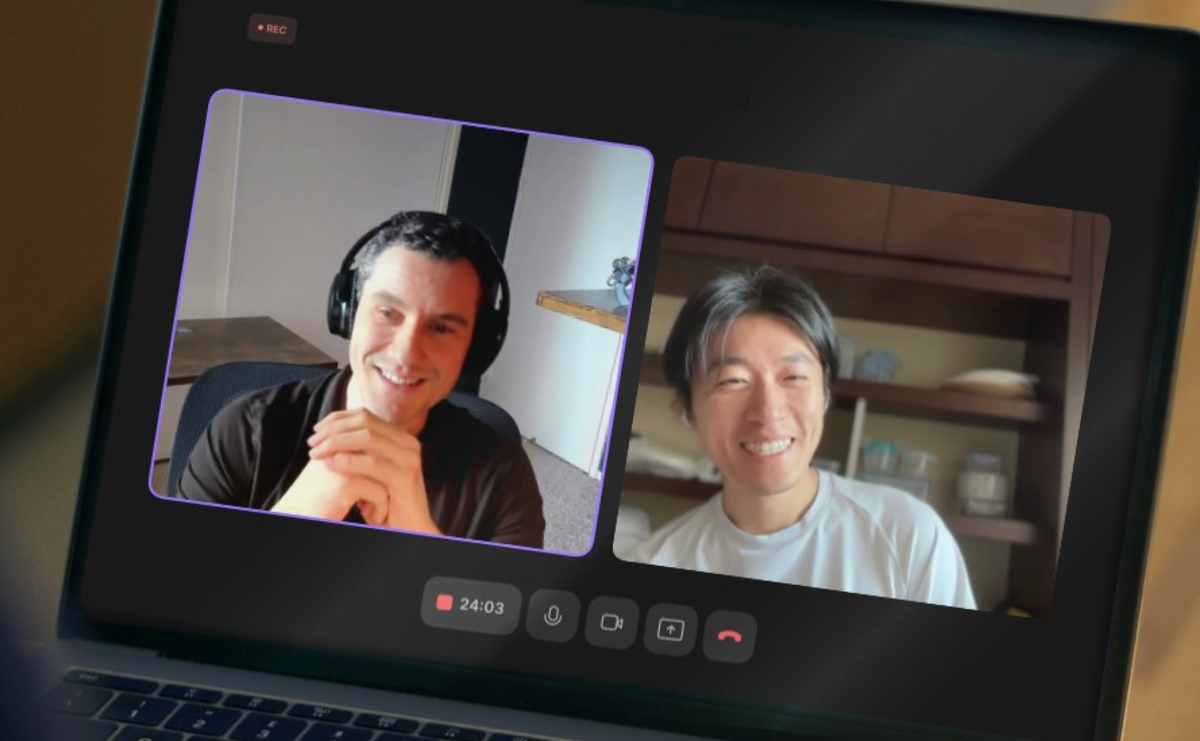
Mike Xia is the co-founder and CEO of Anvil Robotics, a company building what they call the foundry for physical AI. They make the hardware, software, and data tools that let robotics teams go from zero to model training in days instead of months. They've shipped over 100 robots, manufacture in Taiwan, and just raised a $6.5M seed round.
Listen to the episode here:
Summary
There's a pattern playing out across physical AI right now that doesn't get enough attention. Teams raise money, hire engineers, and set out to build intelligent robots. But before they can train a single model, they spend months assembling and debugging the hardware stack underneath it. Writing their own inverse kinematics. Tuning PID controllers. Troubleshooting CAN bus connections. Fighting jitter in camera frames. The work that should be table stakes is eating up the first six months.
Mike Xia saw this problem up close and decided to solve it. Before Anvil, he co-founded a hardware company that shipped $15 million of product to 70 countries and was the first hire at a major compute infrastructure company deploying a billion dollars of GPUs. He and his co-founder Vijay built Anvil to be the infrastructure layer that physical AI teams shouldn't have to build themselves.
The infrastructure gap
The existing robot hardware stack was designed for a completely different market. Industrial robots from Kuka and Yaskawa were optimized for high-throughput factory automation - fast movements through open air, no humans nearby, rigid trajectories. Physical AI needs the opposite: compliant, responsive, safe around people, and running closed-loop controls at kilohertz rates.
Mike walked through the experience most teams go through today. You buy an off-the-shelf arm, and what you're really getting is a high-risk piece of metal. You have to write the controllers, build your own inverse kinematics, handle safety and collision avoidance, figure out your camera frame rates, debug your CAN bus connections. As Mike put it: "Everybody is selling a component, but really what's needed is a system."
With an Anvil dev kit, teams can compress that setup into two to three days. The inverse kinematics, low-level controls, camera integration, data collection in MCAP format, and LeRobot training pipelines all work out of the box.
Why kilohertz-rate controls matter
One of the more interesting technical threads was around control speed. Industrial robots run their see-plan-act loops maybe once a second, sometimes once every five seconds. That works when you're doing pick-and-place in a cage with nothing in the way. Physical AI needs a thousand readings per second to achieve fluid, responsive motion.
Mike used a vivid analogy: slow controls dull your robot's senses. It's like your arm falling asleep - you can move it, but you can't feel anything. That's what current generation models are experiencing when they operate on hardware that can't give them fast enough feedback.
This connects to what Mike called the false tradeoff between payload and force compliance. Industrial actuators use high gear ratios (150:1 or 200:1) that deliver enormous force but create so much friction that the robot is essentially blind to contact. Physical AI actuators use much lower ratios (10:1 to 40:1), and by reading motor current at kilohertz rates, you can detect contact, estimate force, and handle objects delicately - all without expensive force-torque sensors. Anvil is releasing an RL model in the gripper that can handle eggs and grapes with a hundred-dollar actuator.
The economics of a $5,000 arm
Mike was unusually open about manufacturing economics. Anvil builds in Taiwan, sourcing components from mainland China with a three to four day lead time. At current volumes of roughly 150 robots shipped, they're running 20 to 30 percent gross margins after accounting for software, R&D, and customer service.
The deeper point was about why Taiwan matters. The density of skilled technical labor and supply chain infrastructure in Southeast Asia makes it possible to build custom configurations at low volume with positive unit economics. Things like hand-tapping screw threads, custom cable assemblies, actuator QC - processes that would be prohibitively expensive in the US - are routine there. This is what lets Anvil serve the middle of the market: teams that need more than a toy arm but can't raise a hundred million dollars to convince an ODM to build them a custom SKU.
With their current setup, Mike estimates they can scale to about 200 robots a month without a major overhaul.
Open source as a strategy, not a vulnerability
Anvil's reference designs are open sourced on GitHub. Mike was direct about why this isn't a risk: the hardware designs of most robots on the market could be reverse-engineered by anyone with a few mechanical engineers and some funding. The value isn't in the CAD files.
The moat is volume and relationships. Volume gives you leverage on the supply chain - better pricing, OEMs willing to customize for you, favorable payment terms. And relationships in Asia's manufacturing ecosystem are not transactional. Mike spends significant time in Taiwan building the kind of long-term partnerships where a vendor will invest NRE on your behalf because they believe in the trajectory. This takes years and can't be fundraised into existence.
The flywheel Mike described: sell open source dev kits, give away a lot of value in software and training pipelines, build volume, use that volume for supply chain leverage, pass the savings to customers.
The actuator problem nobody talks about
When asked about the most technically wrong thing teams are still doing in 2026, Mike went straight to actuators. Anvil has tested roughly 10 different actuator vendors, and while they all look identical on spec sheets, the real-world performance varies wildly.
The specific metric he flagged was breakaway torque - how much torque you need to apply before the gears actually start moving. Some vendors produce clean, predictable distributions. Others produce what Mike described as a completely random plot. When you're commanding a motor a thousand times a second and the response is different every time, building a well-tuned system becomes nearly impossible.
The analogy he used: imagine typing on a keyboard where every key is randomly stickier or looser each time you press it. Nobody would tolerate that. But that's what many teams are building on today without realizing it. This is why Mike believes you need a company like Anvil handling the low-level infrastructure - including specifying lubricant types, QC standards, and fill rates at the factory level. Most teams can't and shouldn't be doing this themselves.
Where the market goes from here
Mike's prediction is that the market splits into two segments. Vertical players like Figure and Tesla will build everything end to end - their own actuators, their own brains, their own bodies. But a large piece of the market will be non-vertical: teams assembling brains from one provider, bodies from another, with solution providers stitching it together for specific applications. McDonald's isn't going to build its own robot. Neither is Chipotle. Somebody needs to be the infrastructure underneath those deployments.
That's the piece of the market Anvil is betting on.
Full episode available on:
YouTube | Spotify | Apple Podcasts
Learn more about Anvil Robotics: https://anvil.bot