Anvil Robotics Raises $6.5M to Build ‘Legos for Robots’ Platform For Physical AI Teams
Thrilled to be a small backer here!! 💪 🚀 🙌 Mike Xia and Vijay Pradeep are extraordinary entrepreneurs and I'm super excited I get to back them on this journey!!
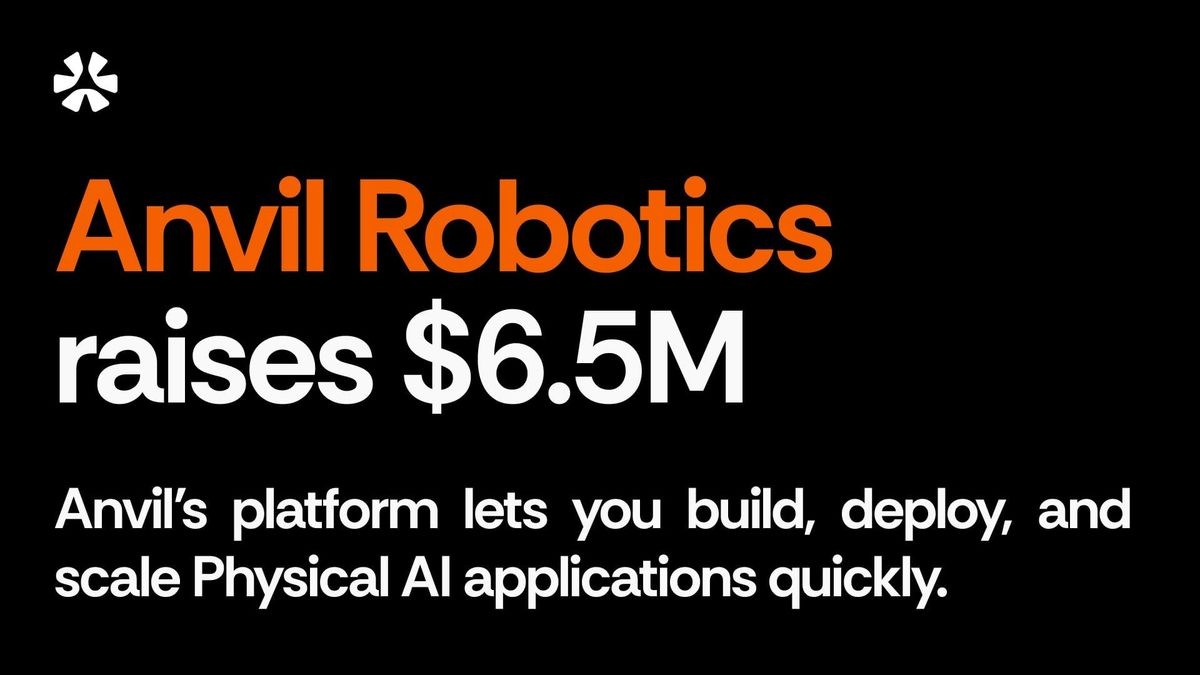
Anvil Robotics has raised $6.5M led by hard-tech veterans Matter Venture Partners and Humba Ventures with participation from Supercharge.vc, Spacecadet, Position Ventures, to build a composable platform for Physical AI.
From the founders themselves:
"Our mission is to accelerate this new wave of builders through a coherent ecosystem of hardware, software, and data solutions.
This space is moving fast — but the underlying infrastructure is moving slow.
Every team is rebuilding the same tools from scratch. Off the shelf Cobot arms, robot controllers, grippers, teleoperation, data collection tools — the surface area is massive, and right now, each team has to figure it all out alone. Only the best-funded labs can afford to get it right.
That's the problem we're here to fix.
Anvil is building a modular platform that gives every Physical AI team access to the same state-of-the-art stack — hardware, software, and data tools that work together out of the box. The kind of setup that used to require a large, experienced team to assemble is now accessible to a grad student with lab funding.
On the hardware side, we're designing with full transparency and builder-friendliness in mind. No black boxes, no lock-in, no vendor relationships that put their margins ahead of your roadmap.
On the software side, we're building the tools as composable modules: performant robot controllers, flexible teleoperation (Quest VR, Gello, leader-follower), reliable data collection pipelines, and more - so teams can move faster and stop reinventing the wheel.
Our mission is to support Physical AI builders. We're just getting started. More to come soon."
See Mike's LinkedIn post here.
 Judy Rider
Anvil Robotics, an eight-month-old startup that aims to be the “Legos for robots,” has raised $5.5 million in a seed funding round, it tells Crunchbase News exclusively.
Matter Venture Partners led the raise, which included participation from Humba Ventures, DNX Ventures, Superhuman founder Vivek Sodera, Spacecadet Ventures and Position Ventures. Anvil had previously raised $1 million in pre-seed capital from Matter in 2025.
The San Francisco-based startup builds custom robots for businesses and describes itself as a hardware, software and manufacturing platform.
Before starting Anvil Robotics last July, Mike Xia, CEO, and CTO Vijay Pradeep, spent six months talking to a variety of businesses. They concluded that physical AI teams in companies, big and small, were spending over six months piecing together various robot arms, cameras and open-source libraries “just to get a glued-together prototype.”
“This isn’t a problem if you’re Tesla, or have nine-figure R&D budgets, and you custom design and build everything, including hardware and software,” Xia told Crunchbase News in an interview. “But for many companies, even well-funded teams, standing up a robotic system with all the sensors and tools and controls you need is a huge challenge that costs you both time and money.”
So the pair started Anvil to fill that gap.
“We support physical AI teams who don’t have $100 million, to make this industry much more accessible,” Xia said.
Customers can go on Anvil’s site and “essentially build out what they want,” he added, using either prebuilt kits or customization.
“They are very much like Legos,” Xia said. Anvil then ships the robots within 1 to 2 days via 2-day air freight. The company is able to do so because it has a significant presence in Taiwan, and is its own manufacturer, he said. (But more on that later.)
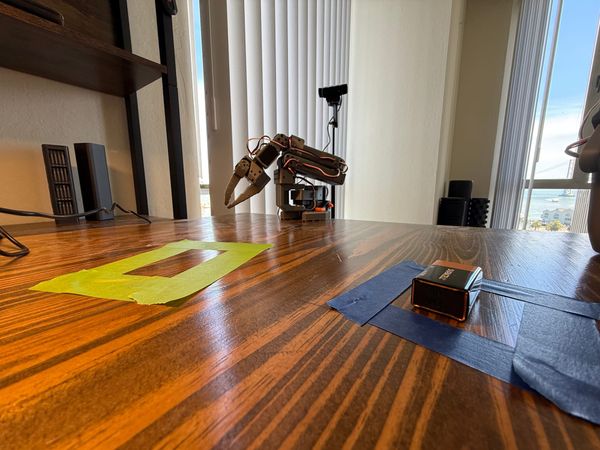
Its robots are about the size of a middle-school-aged child, but big enough to do basic dextrous tasks. Anvil’s robots typically cost $5,000 to $10,000, but its least expensive model is just $1,900.
“I think the pricing is going down to a point where researchers and individuals are able to afford this,” Xia said. “I think it’s going to make a really big difference with the community and we’ll see a lot more activity in people building physical AI applications.”
Anvil started shipping robots in September and has so far delivered over 100 of them to customers globally.
Open-platform approach
Anvil competes with the likes of Universal Robots and Unitree Robotics but claims that it’s different from other startups in the space in a couple of ways.
“Most are basically building toys for rich people,” Xia said.
Anvil’s model stands out, he believes, because it’s an open platform, meaning that all of its robot designs are open-sourced. Most other startups, according to Xia, sell a proprietary design that gets customers “locked in hardware and software.”
“If you work with Anvil, you’re not locked into a single vendor, plus you have large communities behind you,” he said.
Also, as mentioned above, Anvil is an actual manufacturer, and it “controls the whole stack.”
“We don’t outsource — we do this hard part ourselves,” he told Crunchbase News. “We buy each part and operate our own factory, which our customers can leverage.”
Further, Anvil customers can choose where their components come from and how many to build. Historically, if a U.S. company has wanted to deploy a robot, it’s largely been dependent on hardware built in China.
Business Growth
Anvil won’t disclose hard revenue figures, but Xia noted that it has reached seven figures and that it has over 50 customers. That revenue mostly comes from hardware today, but the company plans to release more software, data tools and services, which should diversify its revenue base.
Its customers are a varied bunch, with some “exciting” ones such as giant tech companies under NDA. Those they can talk about are a small chocolate factory based in Portland, Oregon; Nvidia’s GEAR lab, which is doing the humanoid research behind GR00T; and Path Robotics, which has raised more than $300 million to automate welding and industrial tasks.
So far, all of its customers have been inbound, according to Xia.
“It’s all been word-of-mouth, and a lot of it is community-driven,” said Xia, who added that he previously co-founded another startup called Lumina Industries and was formerly chief product officer at Voltage Park.
A ‘robotics foundry’
Haomiao Huang, founding partner at Matter, told Crunchbase News via email that his firm has been investing “at the forefront” of physical AI “for some time.”
“It quickly became clear that innovation on the hardware — the motors, actuators, sensors, systems, etc. — hasn’t kept pace with the rapid improvement in AI. They are still stuck in the same paradigms that powered the industrial robotics of decades past.”
In his view, AI robots today are like “incredible brains trapped in weak, incapable bodies.”
That’s where Anvil comes in. His firm incubated the startup to create a robotics foundry that could “move many companies forward.”
“Behind great generations of products are foundational platform enablers,” Huang said, “and we founded Anvil to be to physical AI what AWS (Amazon Web Services) has been to SaaS and what TSMC (Taiwan Semiconductor Manufacturing Co.) has been to chips.”
The hard part of hardware is less about creating a great robot once, and more about making many great robots “over and over again,” Huang added.
Anvil’s founders, he said, will be able to produce and iterate on hardware at “software-like speeds” and then deliver it at scale in production.
Added Huang: “This is something unmatched.”